


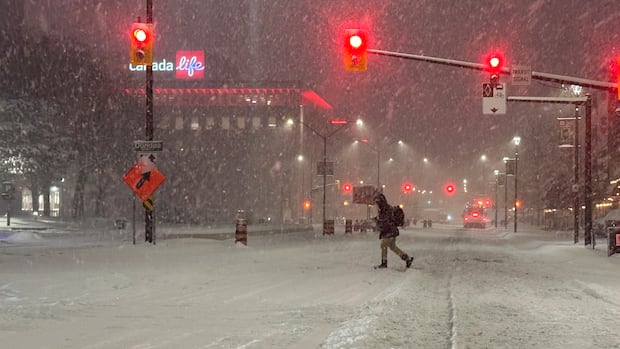
December is often a time of celebration and holidays, but for some, it’s also when the cold winter weather and lack of sunlight can darken your mood.
It’s estimated that about 15 per cent of Canadians will have at least one mild episode of seasonal affective disorder — a subcategory of clinical depression that is only experienced during the winter — in their lifetime, according to the Canadian Psychological Association.
But even if that’s not the case, you could just not be feeling your best.
“There are people who have milder symptoms — not to the point where they have interference in their functioning — but which, you know, are troublesome for them,” said Dr. Raymond Lam, a professor of psychiatry at the University of British Columbia who has been researching seasonal depression for decades.
If the dark, cold days of Canadian winter are getting you down, here are some methods that could help.
Light therapy
One of the most commonly recommended remedies for seasonal depression is light therapy, something researchers have been studying for decades.
If done correctly, it can provide substantial relief for most people, says Lam.
Researchers believe it helps regulate people’s circadian rhythms as the days get shorter during the winter months, Lam said.
“The effect is pretty quick. So usually when people are using light therapy, they notice a benefit within, you know, a week or two,” Lam said.
But the key is using a light box that is bright enough — with light that is at least 10,000-lux intensity — for at least 30 minutes a day, and being consistent, he said.
“If they stop using the lights, unfortunately, the effect wears off about the same way.”
If you don’t have access to a light box, going outside during a sunny day could do you just as much good.
Lam said direct sunlight can emit between 50,000 to 100,000 lux, while going outside during a cloudy day would be about 3,000 to 5,000 lux. By contrast, typical indoor lighting is usually under 100 lux levels.
“So a noon walk is a very good idea in the winter time because you’re getting some exercise as well as your outdoor light exposure,” Lam said.
Connecting with nature
While out on that walk, paying close attention to the nature around you could have additional mood-boosting effects, according to one Edmonton-based researcher.
Holli-Anne Passmore, an associate professor of psychology at the Concordia University of Edmonton, has conducted several studies on the correlation between nature and people’s well-being, asking participants to pay attention to what nature they see during the day while going about their usual routines.
She’s conducted these studies during warmer months and during the dead of winter, and says the results have been the same.
“Really, I’m getting the exact same results. I’m getting higher levels of positive emotions, definitely higher levels of … feeling grateful, feeling touched, feeling spiritually moved, feeling morally elevated,” she said.
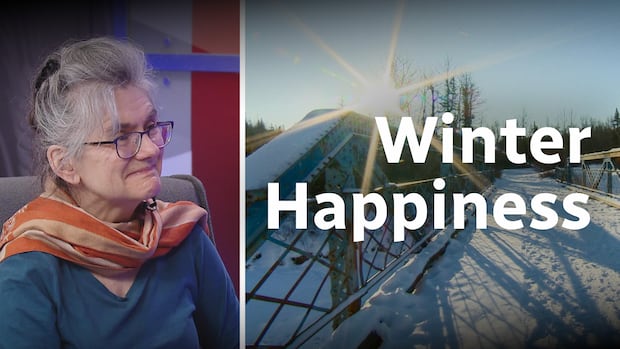
Researchers from Concordia University of Edmonton are looking at how observing nature could impact your mental health. Holli-Anne Passmore is the lead researcher on a project called Noticing Nature Intervention. She shared her work with the CBC’s Nancy Carlson.
Passmore said you also don’t have to spend a long time outdoors, or even go outside, to get these benefits.
“Even when I did this in the winter, like –35 C in Edmonton for a week, some of the stuff was the cactus in my house, the sky outside, I saw a bird, because that’s nature.”
Lessons from the north
Another way to beat the winter blues? Embrace it fully and find ways to make the coldest months of the year something special.
That’s what psychologist Kari Leibowitz recommends.
In 2014, she spent a year in northern Norway to find out why people there experienced lower rates of seasonal depression, despite living through the polar night where the sun doesn’t rise for weeks during the winter months.
What she found was that people’s mindset made all the difference.
“I think people really looked forward to the things that they did that were special in the winter,” she said.
“They talked a lot about skiing, but they also talked about city festivals. They talked about how beautiful the light was at that time of year. They talked a lot about opportunities for being cozy.”

Leibowitz says it’s important to appreciate and accept winter for what it is.
“It’s not summer. It’s not your time that you’re going to the beach and hiking all day,” she said.
“But that doesn’t mean that there aren’t different pleasures that you can’t sort of really focus on.”
Connecting with others can also help, says Sheila Levy, the executive director of Nunavut Kamatsiaqtut Help Line, who spent close to 40 years living in Canada’s North.
During her time in Nunavut, Levy said the weeks of polar night were also a time spent with others playing games and socializing.
“Every night we were in the school gym, playing different Inuit games and just talking and being with the community … the sense of joy and community really, really was amazing,” she said.
“And I could really see how people could get through a lot by feeling close to each other and feeling that there was purpose in their life and there were things to do and that people cared.”
