

Venezuela vexes Trump but rightward trend across Americas could help U.S. national security strategy

The National Security Strategy document released by the Trump administration this week made immediate waves. In addition to the provocative claim that Europe is facing “civilizational erasure,” it contains expansive thoughts about the Americas.
“The United States must be preeminent in the Western Hemisphere as a condition of our security and prosperity — a condition that allows us to assert ourselves confidently where and when we need to in the region,” the National Security Strategy reads.
Even before the document came out, the Wall Street Journal had been regularly using the term “Donroe Doctrine,” coined by one analyst to describe the second Trump presidential administration’s approach to its own hemisphere, citing factors that included adopting Canada as another American state.
The 1823 Monroe Doctrine, formulated by President James Monroe, was originally aimed at opposing any European meddling in the Western Hemisphere and was used to justify U.S. military interventions in Latin America.
This time around, the meddling Washington worries about is clearly China-focused. China is the largest trading partner of Mercosur, the bloc that includes Brazil, Argentina and a few other South American countries, and Beijing began signing development deals in Latin America last decade as part of its Belt and Road Initiative.
In terms of U.S. military intervention, the most obvious signs hover around Venezuela. Since mid-summer, the U.S. has doubled a reward leading to the capture of autocratic leader Nicolás Maduro and conducted a series of controversial, deadly strikes on alleged drug-carrying boats it links to Maduro’s administration.
On Wednesday, the U.S. announced it had seized an oil tanker off the coast of Venezuela.
The U.S. has seized an oil tanker off the coast of Venezuela, President Donald Trump said on Wednesday, ratcheting up tensions with Caracas.
According to its National Security Strategy, The Trump administration wants to “focus on enlisting regional champions” that “would help us stop illegal and destabilizing migration, neutralize cartels, nearshore manufacturing and develop local private economies, among other things.”
If the goal is to find like-minded governments — the type that eschew nationalized industries or in some instances cut corners in terms of the rights of criminal defendants — the Trump administration might be encouraged by what it’s seeing in much of Central and South America (Venezuela aside).
Front Burner26:13Trump’s vision for a new world order
Another shift to right expected
Just over two years ago, Argentina, Bolivia and Chile were all led by left-leaning or socialist governments.
Argentina veered to the libertarian right in 2023, and President Javier Milei strengthened his hand in this fall’s midterm elections. The Trump administration made a direct intervention ahead of the vote with financial assistance to help Argentina, a longtime debtor with the International Monetary Fund.
Earlier this year, Bolivia’s election featured two conservative candidates, casting aside the nearly two-decade dominance of the Movement Toward Socialism party, most famously led by Evo Morales. Rodrigo Paz prevailed, succeeding leftist Luis Arce as president.
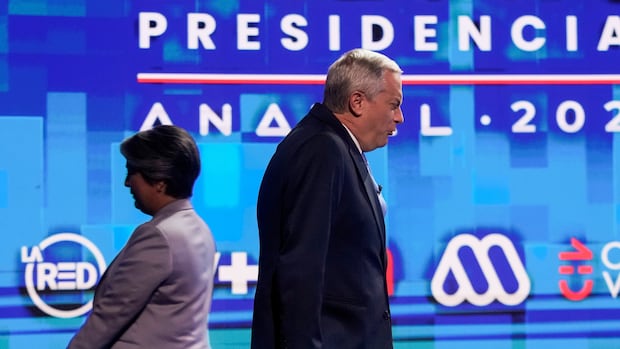
In Chile, left-leaning president Gabriel Boric is departing, and in Sunday’s second-round election, the polling favourite is Jose Antonio Kast, who as a young adult supported Augustino Pinochet, the general who led a U.S.-backed coup in 1973 and had dissidents detained or disappeared.
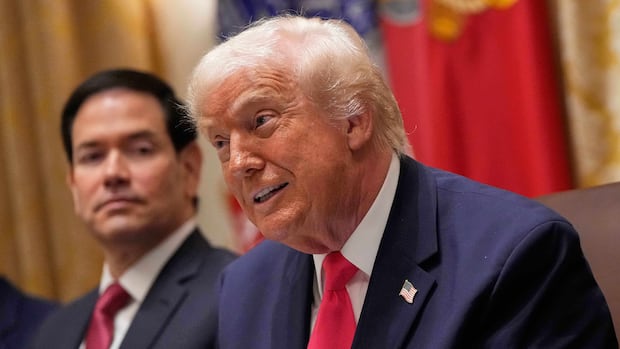
U.S. President Donald Trump threatened to expand his crackdown on drug trafficking during a cabinet meeting, suggesting he’d order land strikes on Venezuela and attacks on any country transporting illegal drugs into the U.S.
Kast has pledged to deploy the military to high-crime neighbourhoods, build border walls and a force modelled on Immigration and Customs Enforcement (ICE) in the U.S., according to a Reuters report.
Cartel violence and crime related to the trafficking of cocaine are understandable concerns for many voters in the region. Cocaine production is at all-time high, according to the most recent report from the United Nations Office on Drugs and Crime, with Columbia, Peru and Bolivia home to considerable coca plant cultivation, according to the think-tank Insight Crime.
Ecuador saw a dramatic rise in homicides in the five years preceding the 2023 election of conservative Daniel Noboa, and clearly some voters favoured his approach to stemming the largely drug-fuelled violence, as he beat the same opponent this year by a wider margin.
Critics say Noboa is emulating the approach of El Salvador’s Nayab Bukele, the popular authoritarian the Trump administration has praised and human rights organizations have excoriated for his sweeping imprisonments of young men. Bukele helped house U.S. deportees in the country’s harsh prisons this year in exchange for several million dollars.
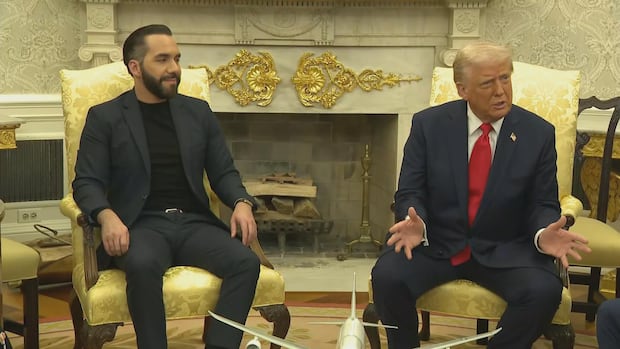
While hosting President Nayib Bukele, Trump doubles down on idea of deporting people to notorious El Salvador prison, even as courts have questioned whether some deportations have been conducted with due process.
Trump undermines drug cartel messaging
Implementing a national security strategy means adhering to it. In that regard, Trump is a wildcard.
Trump has arguably been more critical of Canada than Mexico as the U.S. seeks to redraw its trade relationship — despite Claudia Sheinbaum’s Morena party being to the left of former central banker Mark Carney’s Liberals.
Meanwhile, Mexican cartels are involved in the trafficking of the fentanyl that kills more Americans than any other drug, despite questionable claims from the Trump administration that depict Canada as a major fentanyl source.
The Sunday Magazine21:41As U.S. strikes in the Caribbean intensify, Venezuela braces for what’s next
Trump angrily threatened Brazil with punitive tariffs as its Supreme Court embarked on a successful prosecution of his ally Jair Bolsonaro. But U.S. consumers’ desire for certain Brazilian staple products has led Trump to dial down his rhetoric and pledge to deal with leftist President Luiz Inácio Lula da Silva.
Elsewhere, Trump seems to be undermining his security strategy’s goals. The U.S. has participated with Colombia in combating cocaine trafficking, including in the 1993 operation that killed the notorious Pablo Escobar, and in efforts to eradicate coca crops and promote alternatives for farmers. But Trump has alienated the current president, Gustavo Petro, over both U.S. deportations and the deadly boat strikes.
Trump hopes to have a simpatico government in place across El Salvador’s border from Honduras. He endorsed conservative presidential candidate Nasry Asfura and said they could work together to tackle “narcocommunists.” But in the next breath, Trump pardoned convicted drug trafficker and ex-Honduran president Juan Orlando Hernandez, seemingly on the basis of personal lobbying from longtime Trump advocate Roger Stone.
It’s not yet clear if Asfura will prevail in a razor-thin vote count still underway after the Nov. 30 election in Honduras.
Finally, Panamanian President José Raúl Mulino leads a conservative alliance in his country, but the American resuscitation of the Panama Canal issue has complicated the relationship.
Nevertheless, Trump could have an opportunity very soon to weigh in on another LatAm country dealing with a rise in drug-related crime, as Costa Rica holds an election in February. Conservative or right-wing parties will also have a chance to seize a full term in office in 2026 in Brazil, Colombia and Peru.
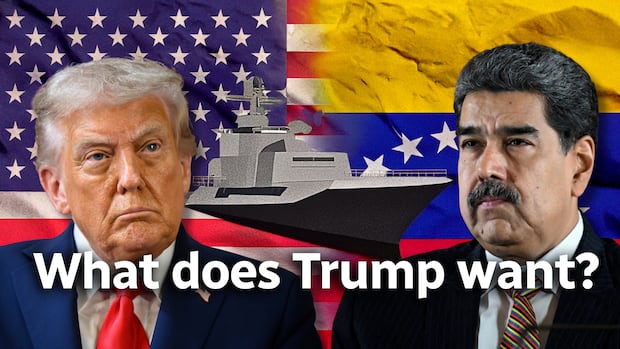
What’s President Donald Trump’s endgame with repeated U.S. strikes on boats near Venezuela? Andrew Chang breaks down the threats the Trump administration says it’s reacting to and why Venezuela’s relationship with China may also be a factor.
Images provided by Getty Images, The Canadian Press and Reuters.
Regional conservatives fete Machado
Meanwhile, Milei, Noboa, Mulino and Santiago Peña —president of Paraguay, where conservatives have dominated for decades — travelled to Norway this week to celebrate Venezuelan politician Maria Machado receiving the Nobel Peace Prize.
The conservative Machado would have been Maduro’s likely opponent in the 2024 election had she not been disqualified for specious reasons. She later fled the country to avoid being locked up.

She has denied speaking to the Trump administration about Venezuelan regime change, or succeeding Maduro as an interim leader. But she has praised what she believes will be a deterrent approach by the Trump administration toward Maduro.
Some analysts worry about a power vacuum should Maduro be deposed, including one analyst who posited to CBC News the possibility in such a scenario of “protracted, low-intensity warfare” involving not only Maduro loyalists but non-state armed groups, including expat Colombian rebels.
Read the U.S. National Security Strategy document:
