


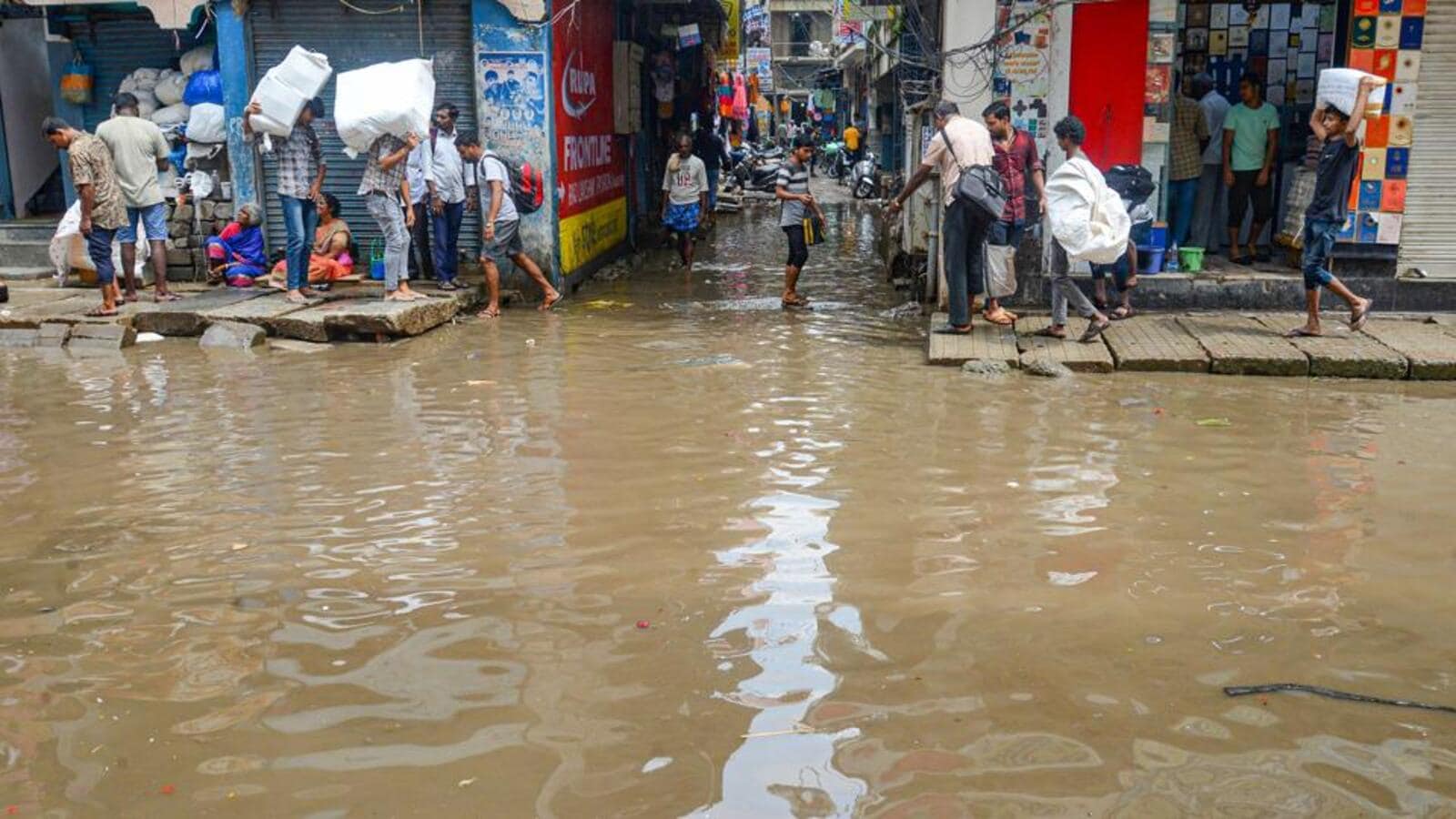
Bengaluru continued to receive light showers on Sunday as the India Meteorological Department (IMD) said the city will receive light-to-moderate rain till December 13, owing to the impact of the cyclonic storm Mandous over the southwest Bay of Bengal.
The meteorological department issued a yellow alert for the capital city on Sunday.
Yellow alerts were also issued on the same day for the Chamarajanagar, Chikkaballapur, Chikkamagaluru, Hassan, Kodagu, Kolar, and Mysuru districts.
The city experienced light showers on Saturday as cyclone Mandous completed its landfall process and weakened into a depression. This impacted the movement of traffic, ride-hailing services and food delivery across the city.
As of 5:30 pm on Sunday, Bengaluru city weather station recorded 11.8 mm of rainfall.
The Bengaluru International Airport (KIAL) station recorded 1.7 mm, while the HAL airport station recorded 4.7 mm of rainfall.
The city also witnessed a drop in the minimum temperature to 16.8 degrees Celsius on Saturday. On Sunday, as of 5:30 pm, Bengaluru city recorded a maximum temperature of 21.6°C and a minimum temperature of 17.8°C.
The forecast by the meteorological department means that the city’s temperature may dip further, and Bengalureans may continue to feel the chill.
The maximum and minimum temperatures are likely to be around 22°C and 18°C, respectively, for the next 24 hours, the meteorological department said.
The sudden drop in mercury levels and incessant rains resulted in a surge in the number of flu and cold cases, doctors pointed out.
“The current season, with a dip in temperatures and incessant rain, has seen a surge in the number of flu and cold cases,” Dr Suchismitha Rajamanya, consultant, internal medicine, Manipal Hospital Whitefield, said.
Approximately every 5 to 7 out of 10 OPD cases are turning out to be flu or cold cases, Dr Rajamanya said, adding that the number of hospitalisations due to respiratory issues has increased by almost 30 to 40%.
“Though all age groups seem to be affected, there is a preponderance in the elderly and children, owing to their immunity,” Dr Rajamanya said.
“We can expect to see an increasing trend of cases in the coming days, owing to the inclement weather, year-end social gatherings, and relaxation of rules regarding masking up,” she added.
Suggesting that people should take basic precautions like hand hygiene, wearing masks, staying warm, and avoiding cold and refrigerated food items, Dr Rajamanya said these practices would go a long way in reducing the risk of infection.
“People should dress up warm and wear masks if they are symptomatic. Stay healthy by eating home-cooked meals, preferably hot and fresh. Avoid eating outside because not just flu, even acute gastroenteritis symptoms are on the rise.”
Dr Pavithra R, consultant, internal medicine, Manipal Hospital, Hebbal, suggested people get the recommended routine flu shots for children if it’s due, since every year, the flu strands keep changing.
“Elderly people will be more vulnerable to cold and flu due to low immunity. If they have minute symptoms, don’t take unnecessary medications. Please consult a doctor at an early stage,” Dr Pavithra said.
“There are medicines to treat viral infections, but mainly, it is the symptomatic treatment. We should also watch out for secondary infections like bacterial infections, which need antibiotics,” she said.
Doctors also pointed out that because of the weather, some patients are presenting with acute gastroenteritis, and in some cases, bacterial gastroenteritis.
“We also have to look out for the rise in dengue cases. We should use mosquito repellents and stay hydrated even in case of viral fever and flu. If the fever persists for two or three days, consult a doctor immediately. Wear a face mask and use sanitisers when symptomatic. Maintain good hydration when symptomatic,” Dr Pavithra added.
