


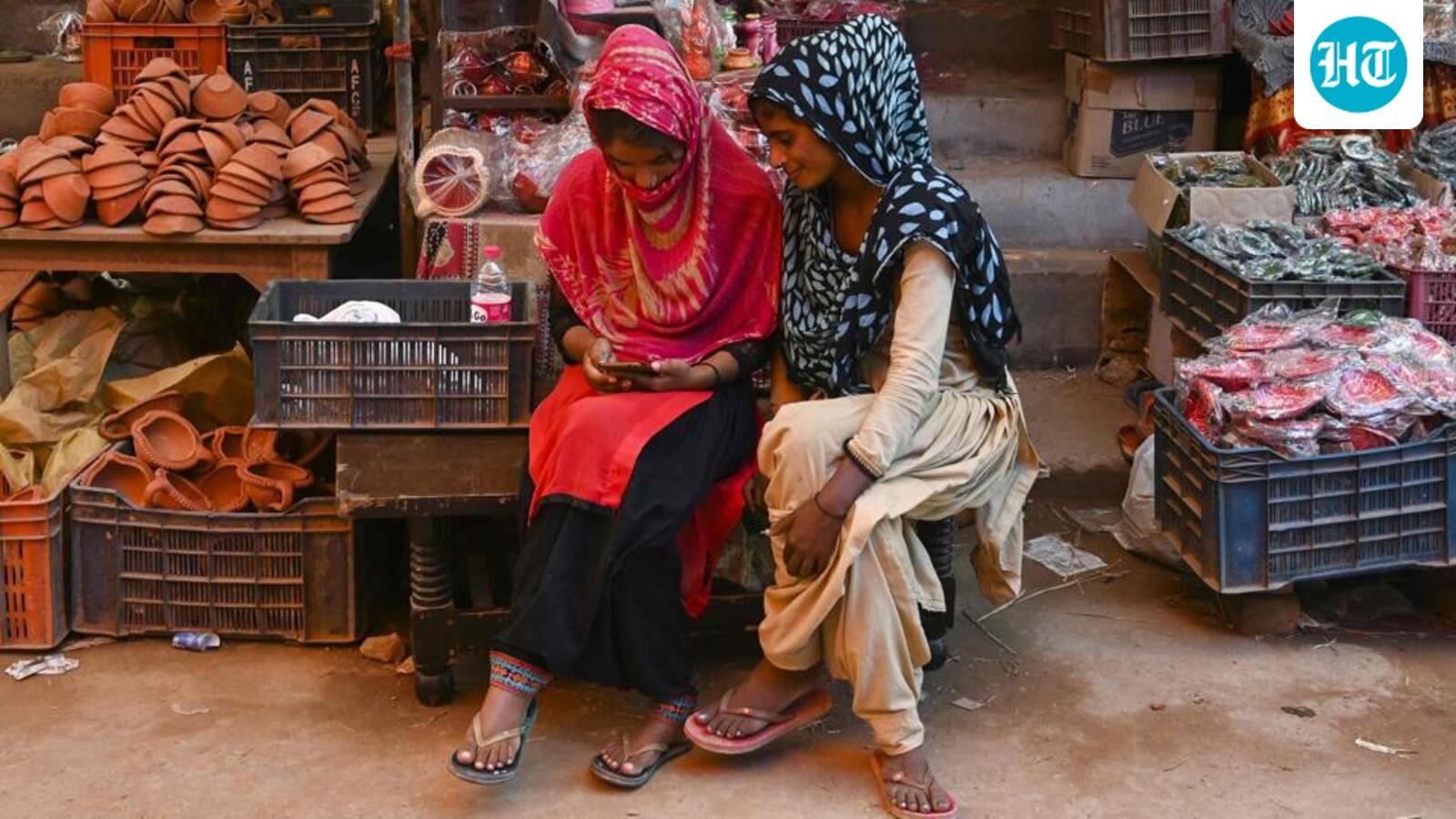
A panchayat in Rajasthan’s Jalore district has banned the use of smartphones with cameras for women across 15 villages in a bid to curtail excessive use of mobile phones by children. The ban will come into effect from January 26 and applies to daughters-in-law and unmarried girls of the community.
Under the new rule, women will not be allowed to carry smartphones at public gatherings, social functions, weddings, or even while visiting neighbours’ houses. Instead, they have been instructed to use basic keypad mobile phones for communication. The restriction also extends beyond public spaces, significantly limiting the use of smartphones outside the home.
The panchayat, however, has made a partial exception for school- and college-going girls.
Defending the decision, community president Sujanaram Choudhary said that the rule was introduced due to concerns over children’s excessive use of mobile phones. He said that when women carry smartphones, children tend to use them frequently, which could harm their eyesight. He explained the restriction as a necessary step taken in the interest of children’s health.
The panchayat decided that if mobile phones are required for educational purposes, students will be permitted to use them only within their homes. However, carrying mobile phones outside the house, even for academic reasons, has been prohibited.
The decision was taken during a meeting held on Sunday in Gazipur village of the Sundhamata Patti area. The meeting was chaired by Choudhary and attended by representatives from 14 pattis (a local unit referring to areas dominated by a particular community). During the meeting Panch Himmataram read out the proposal during the meeting, which was reportedly put forward by Devaram of Karnol village. After discussion, the proposal was approved by the assembled panchayat members and community representatives.
The ban will be implemented in villages including Gazipura, Pavli, Kalda, Manojiya Vas, Rajikavas, Datalavas, Rajpura, Kodi, Sidrodi, Aladi, Ropsi, Khanadeval, Savdhar, Hathmi ki Dhani of Bhinmal, and Khanpur.
Meanwhile, the decision has sparked a debate within and outside the community, with critics questioning its impact on women’s freedom, education, and access to technology.
Anita Soni, a social activist who runs the Ekal Nari Sangathan, said that while the government is taking steps to empower women through technology — how the previous government distributed mobile phones to women and the present BJP government is providing tablets — deep-rooted societal mindsets continue to create serious obstacles to women’s empowerment. She questioned why restrictions are imposed on women alone and not on men.
Responding to the issue, police officials said on conditions of anonymity that they have not received any such complaint so far. However, they added that appropriate action would be taken if anyone approaches them with a formal complaint.
