


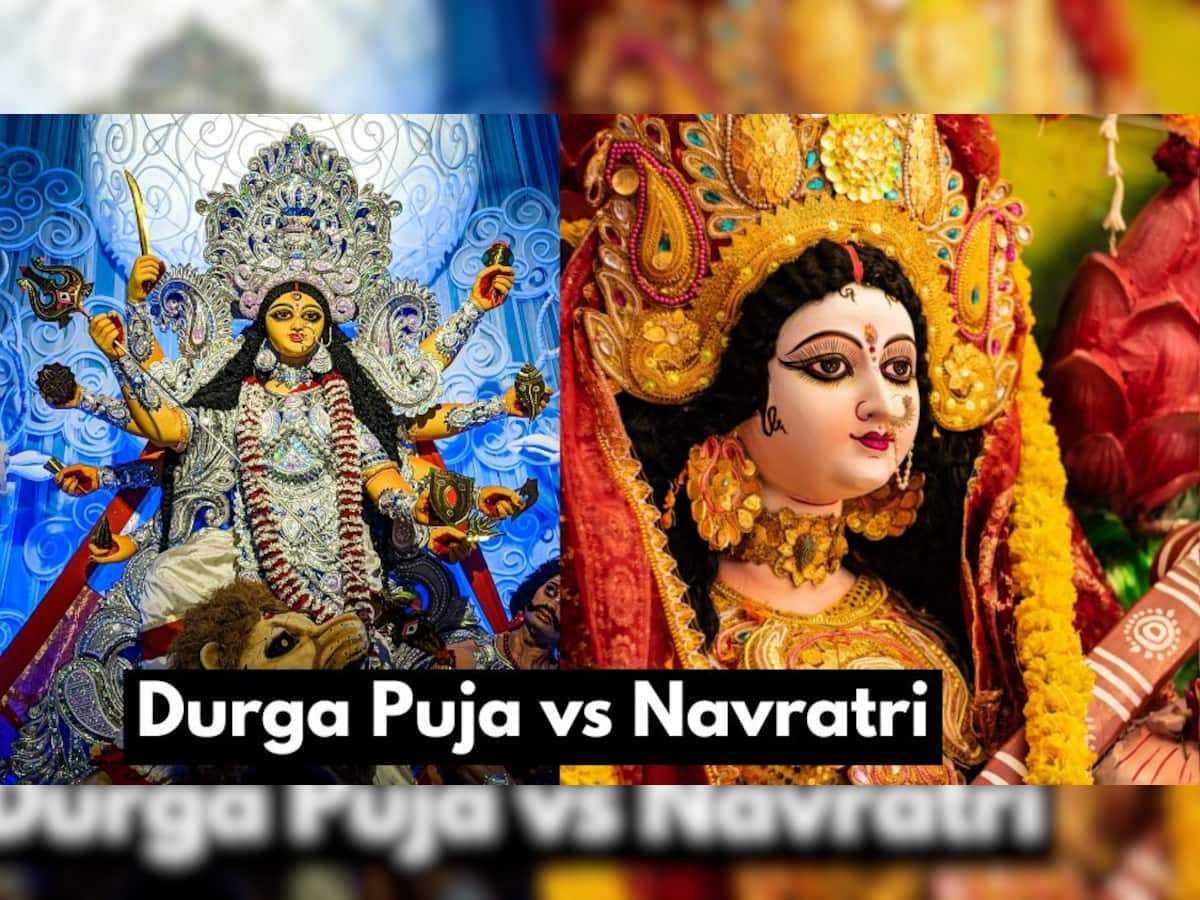
Durga Puja and Navratri are two vibrant and widely celebrated festivals in India that honor the goddess Durga. While both festivals share a common theme of worshipping the divine feminine power, their customs, cultural significance, and modes of celebration vary significantly. Here’s a closer look at the major differences between Durga Puja and Navratri:
1. Duration and Timing
Navratri:
Navratri literally means “nine nights,” and the festival spans nine nights and ten days. It is celebrated twice a year — the spring Navratri (Chaitra Navratri) and the autumn Navratri (Sharad Navratri), with the latter being the more widely celebrated one. The festival typically falls in September or October.
Add Zee News as a Preferred Source

Durga Puja:
Durga Puja primarily lasts for five days, culminating on the tenth day known as Vijayadashami or Dussehra. It is celebrated predominantly during Sharad Navratri, mainly in the eastern parts of India, especially West Bengal.
2. Geographical Popularity
Navratri:
Navratri is celebrated across India with regional variations. It holds special importance in states like Gujarat, Maharashtra, and Karnataka, where the focus is often on fasting, dance, and rituals dedicated to different forms of Goddess Durga.
Durga Puja:
Durga Puja is primarily associated with West Bengal, Assam, Odisha, Bihar, and Tripura. It is a grand cultural event in Bengal, where it is celebrated with elaborate decorations, artistic idols, cultural programs, and community feasts.
3. Rituals and Worship
Navratri:
During Navratri, devotees worship the nine forms of Goddess Durga (Navadurga) each day. The festival involves fasting, chanting, and traditional dances like Garba and Dandiya, especially in Gujarat and Maharashtra. Temples are decorated, and special prayers are held each day.
Durga Puja:
Durga Puja revolves around the creation and worship of large, artistic idols of Goddess Durga slaying the demon Mahishasura. The festival includes rituals like Bodhan (awakening the goddess), Sandhi Puja (special worship at the juncture of Ashtami and Navami), and immersion of idols on Vijayadashami. It’s more community-oriented, with grand pandals (temporary structures) showcasing artistic themes.
4. Cultural Aspects
Navratri:
Navratri emphasizes devotional music, dance, and fasting. The celebrations are more religious and spiritual in nature, with an emphasis on physical austerity and devotion.
Durga Puja:
Durga Puja is as much a cultural extravaganza as a religious festival. It features artistic displays, music concerts, theatrical performances, and social gatherings. It’s a time for people to reunite, celebrate, and enjoy elaborate feasts.
5. Purpose and Symbolism
Navratri:
Navratri symbolizes the victory of good over evil through the worship of the nine forms of Durga, celebrating her power to destroy negativity and restore harmony.
Durga Puja:
Durga Puja specifically celebrates the victory of Goddess Durga over the demon Mahishasura, symbolizing the triumph of divine forces over demonic powers. It highlights courage, righteousness, and protection.
Though Durga Puja and Navratri are intertwined in their devotion to Goddess Durga, they differ in their regional expressions, rituals, and cultural flavors. Navratri offers a pan-Indian spiritual celebration marked by fasting and dance, while Durga Puja is a grand, community-centered festival known for its artistry, elaborate rituals, and festive spirit.
(This article is intended for your general information only. Zee News does not vouch for its accuracy or reliability.)
