


The Arctic char, a red-pink bellied relative of trout and salmon, is a staple food source for millions of people living in the Arctic. But that dynamic is being embrangled by climate change, as the Arctic is warming two to four times faster than the rest of the world.
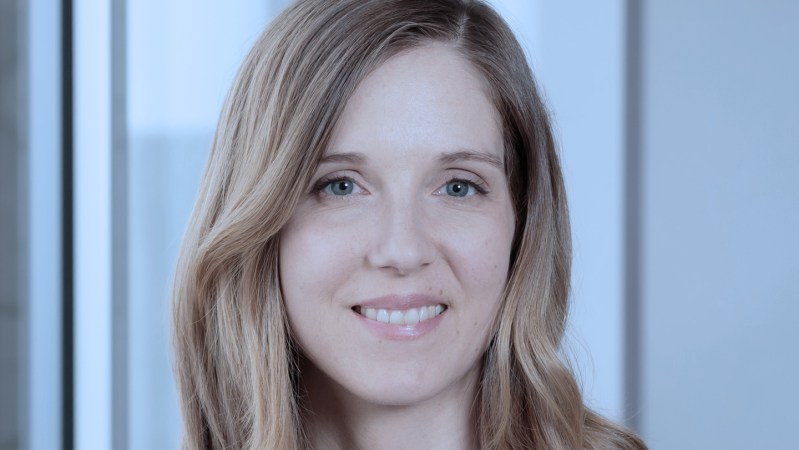
Marianne Falardeau, a polar marine ecologist at Université TÉLUQ in Quebec City, Canada, studies how climate change is reshaping boreal and polar marine ecosystems and the benefits those ecosystems provide to people, aiming to help northern communities adapt to the shifting environment. In 2022, she coauthored a study showing how to make small-scale fisheries in the Arctic more resilient in the face of climate change.
Much of Falardeau’s research involves working closely with Indigenous coastal communities. For another 2022 study, she and colleagues combined biophysical data from Arctic char with observations made by Inuit fishers to assess how environmental changes had shifted the timing of fish migrations over a 30-year period. The collaborative approach helped to broadly capture the influence that seasonal ice changes had on the diet and nutrient quality of fish.
“In the Arctic, there [are] Indigenous people who have been living there for millennia — they have deep knowledge about the land, the ocean, the animals, how they’re changing,” she says. “My research wouldn’t be possible without these connections.”
TRANSCRIPT
Marianne Falardeau: I study marine ecosystems and fisheries of the Arctic in the context of multiple pressures. This includes climate change that is very intense in the Arctic. Arctic char, the most harvested aquatic species in the North in terms of the fisheries, really important for food security and culture. But of course, it’s, as many species in the North, has been impacted by climate change and will continue to be.
There’s a phenomenon called the Arctic amplification, where the Arctic is warming up to four times more rapidly than the rest of the world. So this has a range of biophysical impacts, including the decline of the sea ice cover. And so in turn, these climatic changes affect the plants, the animals and the humans who live in the Arctic — and also beyond the Arctic. We’re all connected to this region of the world.
We bring together different lenses to study the environment, study how the Arctic is changing. So the goal is to look into social ecological systems, you know, today, but then explore what they might, how they might be in the future, to be better prepared. So we bring together experts from different fields of science, but also outside academia. So indigenous knowledge holders and managers, we get together as part of workshops to explore the future of this system.
It’s a really powerful approach that I’m really excited about and hope to use as much as possible to bring different perspectives into what the future might be and how to bring about the best possible future outcomes for future generations.
I became interested into working with communities. I was very curious to know more about their knowledge of these changes. We need to work with communities around the world. In so many regions you have these coastal communities who are there year long, have observations. And in the Arctic, there’s indigenous peoples who’ve been living there for millennia. They have deep knowledge about the land, the ocean, the animals, how they’re changing. So I wanted to have an approach in my Ph.D. that’s, bringing together these different, types of knowledge.
My research wouldn’t be possible without these connections. It’s as central as it is. And, of course, there’s stories of ways of understanding the scientific data that we wouldn’t have without working together. For example, in one of my projects, as part of the biophysical data, we were seeing that what they’re eating was more typical of the open ocean and trying to, like, make hypotheses for why we were seeing that.
And at the same time, I was doing interviews with Inuit knowledge holders, with experts, with fishers about their observations of changes. Some elders were telling me that they were observing char farther away from the shore. And they were thinking it’s because the shallow water near the beaches or the shore were warming more rapidly than in deeper areas, and so the fish were hanging out more farther away from the shore.
And that could actually make sense with the biological data and the signature we were seeing in the diet. And so we were able to gather to kind of have these hypotheses that bring together their observations of fish behavior and the biological data. And these two different observations required different ways of being on the land. Of course, when you’re fishing, you’re there a lot of, like, all the time when you live there. And so you have these, kind of, granular observations of behaviors that, as scientists, we might miss because we’re there for shorter periods of times. So this is just an example, but they had this complementarity of observations that allow to have rich understanding of what’s happening.
When you’re starting as a young, you know, undergraduate student, sometimes you don’t necessarily have a lot of models to look up to. And I think it’s changing, but that’s how it started. It’s like, you know, trying to find models, of women in the field. You have this leaky pipeline phenomena where at the undergraduate level, you have almost 50–50 percent female and male students in the universities.
And as you go up the academic ladder, you have, you know, less and less women that are able to keep going in this field because there’s more and more barriers to being a woman, being a mum in academia. But specific to my field, being in this gender involves different challenges from, you know, having your period in the field and these kinds of things that we don’t necessarily talk about.
The suits are really made for men. And so you have clothing for the field that’s just made for males. And so it’s small things, but just things that I think are important to think about so that people feel included in the field — like, how do you make these, you know, emergency plans or first aid training inclusive of all genders. And so I think these are the kinds of discussions I think are really important. I’ve been trying to push for and I think is changing a lot.
It’s hard for me to know how my research impacts people because it’s a long process. And in this kind of research, you have in some ways to do it because you believe in this kind of approach, but sometimes you won’t necessarily see, in a very explicit way, how it has an impact on people.
However, I’m very hopeful about the future because I do see that there’s a big shift in academia and there’s a lot of changes happening to allow for this kind of process and research. And I think there is a lot of hope looking ahead in terms of the future of research.
