


Listen to this article
Estimated 3 minutes
The audio version of this article is generated by text-to-speech, a technology based on artificial intelligence.
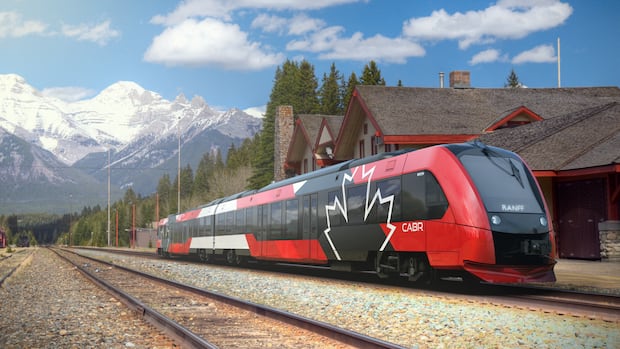
A proposal for a hydrogen-powered passenger rail connecting Calgary and Banff has been submitted to the federal government in the hopes of having it fast-tracked.
Liricon Capital and Plenary Americas will pay for the line connecting the city to the mountain town, as long as the provincial government pays for a rail connecting the Calgary International Airport to the downtown.
Calgary Mayor Jeromy Farkas called the project not only a “critical economic development” opportunity, but also “a value for everyday commuters.”
“It’s not just for visitors to Calgary to hop on a train, go downtown, see our amazing city, and then go on to the mountains,” he said. “It’s also a benefit for commuters in Calgary to be able to get to the airport [and] to work.”
The federal government’s Major Projects Office, which helps expedite projects “of national significance,” declined to comment on the rail proposal.
Farkas said the rail line would benefit other southern Alberta communities as well. The proposed rail would have stops in Cochrane, Mînî Thnî and Canmore, for instance.
“It reflects a way that we can better work together and hunt as a pack on these economic opportunities,” he said.

Joe Pavelka, a professor of ecotourism and outdoor leadership at Mount Royal University, pointed to several potential benefits of the rail, including helping alleviate Banff’s concerns around vehicular traffic.
“That’s going to have a very positive impact for Banff and for the entire Bow Valley,” he said. “It just makes managing people in the park easier.”
He expects much of the rail’s ridership to be commuters and people going to and from the airport, rather than tourists.
He said being able to easily go to and from Banff without a car would also make Calgary a more competitive market for hosting conferences and conventions.
Provincial support is main hurdle, developer says
Paul Martin with Plenary Americas said in an emailed statement that, depending on when the province comes on board, the rail project could start construction in 2028 and start carrying passengers by 2030.
“In terms of major hurdles, the primary one is getting government commitment to this project,” he said.

This proposal has been in the works for years. The previous provincial government, under Jason Kenney’s leadership, wouldn’t dedicate money to the idea.
Provincial Minister of Transportation Devin Dreeshen said “it’s still very early” when asked about committing to the project, pointing to the need for consultation with municipalities and First Nations, as well as an assessment of how the project aligns with the province’s passenger rail strategy.
Jan Waterous, Liricon’s managing partner, said receiving the green light from Ottawa’s Major Projects Office might help expedite the provincial government’s approval of the project.
“Our hope is that should this project be approved by the Major Projects Office, that this would provide the province with further comfort that we’re serious and that this project could actually get built.”
Since the Major Projects Office launched in August, Prime Minister Mark Carney has recommended 11 projects for fast-tracking, none of which are in Alberta.
