


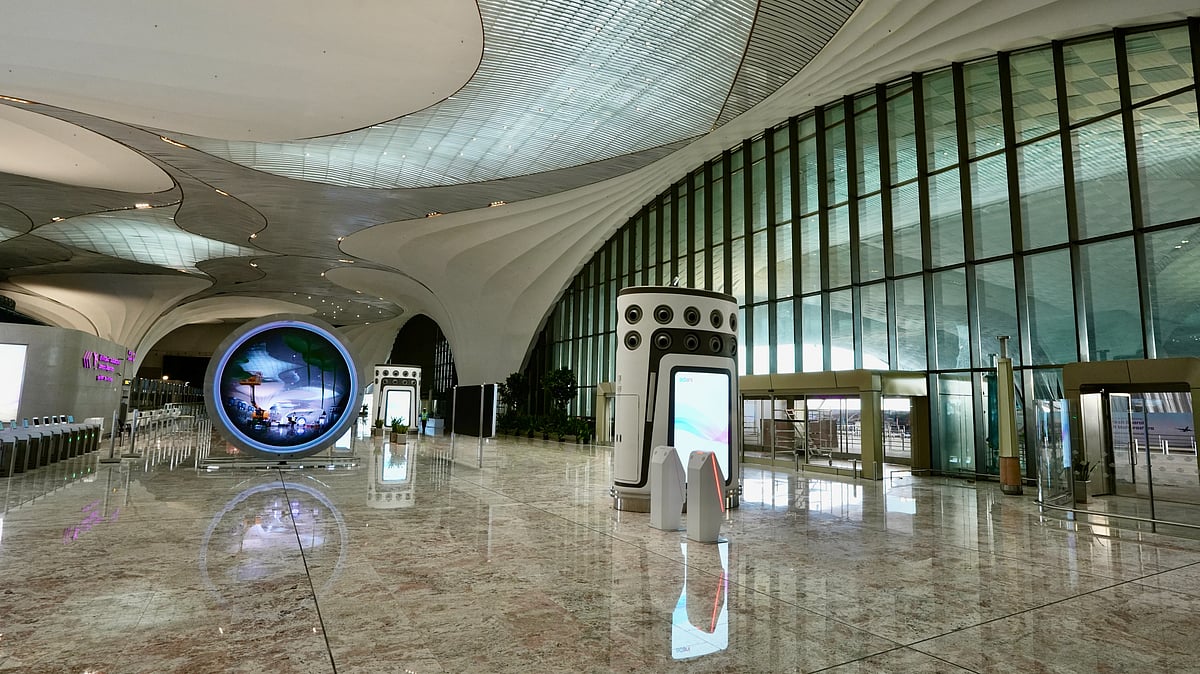
Watching aircraft land and lift off from Navi Mumbai today is both historic and deeply nostalgic for me. It closes a circle that began decades ago, when the idea of a second airport for Mumbai was still little more than a bold line on a planning map—and a risky newspaper story.
I still remember breaking the news in a Mumbai (then Bombay) tabloid that Navi Mumbai Airport takes off, after the Centre granted in-principle approval. At the time, the plan was modest and practical.
The original thinking was to locate the airport at Belapur and use it primarily to support exports from the APMC markets, which were shifting from Mumbai lock, stock and barrel on February 1, 1991. Ramprasad Kadam, then chairman of the APMC, had explained to me that air cargo was the immediate objective.
But Navi Mumbai was never meant to think small. R. C. Sinha, the visionary Vice Chairman and Managing Director of CIDCO, saw much more. He believed—rightly—that infrastructure is the engine of a city’s progress.
Having already led the launch of the trans-harbour suburban trains from CSMT to Vashi and then extended them to Belapur, Sinha was focused on all-round development. Passenger flights from Navi Mumbai were always part of that larger dream.
Sinha was accessible in the truest sense. After his Monday meetings with officials and board members, he would often sit down for a simple chai pe charcha, open to ideas and debate. The airport was one big dream many of us shared in those conversations.
The journey, of course, was anything but smooth. Site identification itself was a saga. Conceived as a second airport to decongest Mumbai’s bursting-at-the-seams aviation hub, teams scouted locations as far as Kalyan-Dombivli and even Pune.
Chief Minister Sharad Pawar, however, was keen that the airport come up in Navi Mumbai. Funding was another challenge, as the Centre had limited resources. By then, CIDCO had already begun stepping in to fund even central projects such as the trans harbour rail network, backed by bond issues—money and space were not constraints.
Engineering hurdles followed: hills to be flattened, rivers to be diverted, permissions to be secured amid strong environmental protests. CIDCO pushed through the legal processes, and the project survived years of ups and downs.
Today, the airport is a fait accompli. Flights have taken off, and its long-term impact will be assessed in the years ahead. What gives me cautious optimism is the commitment by NMIAL to protect and maintain biodiversity, especially wetlands, as outlined in its environmental assessments and compliance reports. The responsiveness of the Union Ministry of Environment and the DGCA has also been encouraging.
Also Watch:
As I celebrate this moment, my sincere hope is that Navi Mumbai’s skyline changes for the good—and that the city finally emerges as an independent economic centre, just as it was always envisioned to be.
B N Kumar | File Photo
(Kumar is a senior media professional, living in Navi Mumbai for 45 years).
