


Once in the brain, lung cancer cells can plug themselves into the electrical circuitry there and grow, a study of mice shows. The results, published September 10 in Nature, highlight the deep and mysterious connections between cancer and the brain.
“It’s beautiful work,” says neuroimmunologist Sebastien Talbot of Queen’s University in Kingston, Canada. “It was very interesting to see how these tumors get reprogrammed, and that allows them to actually form this electrical connection with brain neurons.”
Small-cell lung cancer is a particularly aggressive cancer that starts in the lung and, all too often, spreads to the brain. “When things start metastasizing, that’s when patients start really going downhill,” says study coauthor Humsa Venkatesh, a cancer neuroscientist at Brigham and Women’s Hospital and Harvard Medical School. “Clinically, there are really not a lot of options to treat these metastases.”
Understanding the complex relationships between the nervous system and cancer cells may yield new ways to slow or prevent cancers, perhaps by targeting nerve cell activity.
The nervous system has been implicated in other types of cancer, including breast, skin, gastric and pancreatic, Venkatesh says. “Whichever cancer that’s been looked at, honestly, you name it, and the nerves are physically in that microenvironment and play some role in modulating tumor growth,” she says.
In their new study, the researchers looked at small-cell lung cancer in mice. Severing the vagus nerve, a conduit that carries information between the brain and the rest of the body, dramatically slowed cancer growth in the lungs of mice, the researchers found. “It was one of the most striking findings that I’ve had in my career,” Venkatesh says. “When we clipped that nerve, the tumors essentially just didn’t grow.”
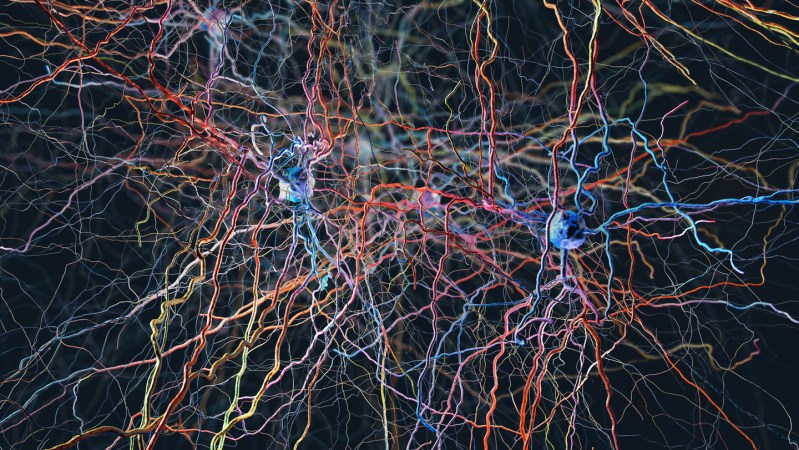
Next, the researchers turned to the brain, where they injected lung cancer cells to mimic cancer metastases. The brain tumors that formed were laced with neurons, high-powered microscopy revealed. What’s more, these neurons were electrically tethered to the cancer cells, forming cellular connections called synapses that move information from nerve cell to cancer cell. Most insidiously, this information included a “grow” signal that led the cancer cells to multiply.
The results highlight the parasitic nature of cancer, says neuroscientist and neuro-oncologist Michelle Monje, a coauthor of the study and a Howard Hughes Medical Institute investigator at Stanford University. “Cancers tend not to invent anything new. They simply subvert and hijack mechanisms that are already at play,” she says.
Another study, also published September 10 in Nature, bolsters the idea that connections between neurons and tumor cells matter. Changes in genes important for synapses and neural communication seemed to help small-cell lung cancer thrive, researchers found.
An epilepsy drug called levetiracetam that dampens neurons’ electrical activity curbed the cancer cells’ growth in the mice’s brains, further experiments revealed. Other drugs or even devices that reduce neural activity might prove promising against cancer’s spread, a direction Venkatesh and her colleagues are eager to pursue. “I think we’ll certainly get there,” she says, but cautions, “it’s just that we are really just very, very early on.”
