


Listen to this article
Estimated 4 minutes
The audio version of this article is generated by text-to-speech, a technology based on artificial intelligence.
The Liberal government has tabled sweeping new legislation that it says will protect victims and survivors of sexual and intimate partner violence and protect children from predators.
Calling the Protecting Victims Act “one of the most consequential reforms of the Criminal Code in a generation,” the legislation also challenges a 2016 Supreme Court ruling that allows cases to be stayed if they are significantly delayed.
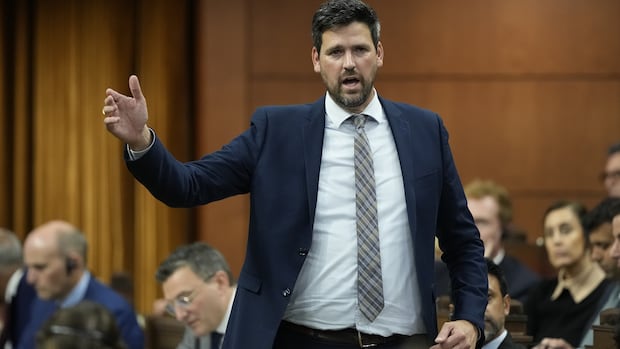
“These reforms strengthen the tools available to protect women and girls, and to hold offenders accountable. Alongside our broader efforts to prevent violence before it happens, we are building a safer and more just Canada,” Justice Minister Sean Fraser said in a statement.
The legislation also proposes to increase penalties for sexual crimes such as distributing intimate images and sexual deepfakes and obtaining sexual services from a child.
The legislation restores the use of mandatory minimum sentences which have been declared unconstitutional by the Supreme Court of Canada and provincial courts across the country. The courts found those sentences violated Section 12 of the Charter by subjecting offenders to cruel and unusual punishment.
Officials speaking on background said mandatory minimum sentences have traditionally violated Section 12 because of a test courts apply called a reasonable hypothetical scenario. Under the test, courts have said not having the flexibility to hand out lighter sentences in very rare cases that could hypothetically happen is unconstitutional. By giving courts that limited discretion, officials say, mandatory minimum sentences will survive constitutional challenges going forward.
In cases where a conviction requires an offender being subject to imprisonment, courts would have the ability to impose a lighter sentence under the Protecting Victims Act, but jail time would still be required. In cases where someone has been convicted of murder or treason, where the sentence is life in prison, lighter sentences would not be permissible.
If the legislation passes, it would restore all mandatory minimum sentences struck down by the courts which remain on the books. Mandatory minimums that have been repealed by Parliament would not be restored.
Intimate partner violence and femicide
The legislation tackles intimate partner violence by making hate-motivated murder a first-degree offence even if it was not deliberate or planned.
Cases of femicide, the killing of a woman or girl, will be considered first-degree murder even if the crime was not planned or deliberate if it can be proved that the victims were subject to a pattern of abuse or coercive control.

Coercive and controlling behaviour is at the centre of many cases of intimate partner violence. A domestic violence advocacy group in Montreal has created a website that offers women resources to help navigate the issue.
The benchmark for establishing that level of abuse requires a court to agree that a reasonable person in the same circumstance would be considered by the court to be controlled or abused, not that the specific victim felt they were being abused or controlled.
The legislation would also create a new offence that identifies and targets patterns of coercive or abusive behavior in order to give the justice system the ability to intervene before a situation rises to violence.
The legislation also updates the law around revenge porn. Government officials said that while it’s already illegal to distribute intimate sexual images of someone without their consent, the proposed legislation would extend the law to cover the use of deepfakes.
Tackling trial delays and stays
A 2016 Supreme Court decision in the case of R. v. Jordan established that criminal cases that go beyond 18 months for provincial courts and 30 months for superior courts can be stayed for unreasonable delay.
Government officials said the number of cases being stayed for violating the Jordan ruling has undermined Canadians’ faith in the justice system.
The Protecting Victims Act would “give courts clear guidance on how to deal with court delays, including in sexual assault cases and make clear that a stay need not be imposed in cases of delay.”
At present, cases can be extended beyond the Jordan deadlines if they are complex, but the law currently does not define what complex means.
The Protecting Victims Act establishes benchmarks for what constitutes a complex case, which includes things like the number motions and applications filed which lead to delays.
The legislation would also require courts to consider alternatives to staying trials that extend beyond the Jordan limits.
Fraser is scheduled to hold a news conference early Tuesday afternoon.
